

Agile Vs Waterfall Methodology
Agile methodology is one of the popular modes of product development that many companies prefer. Don’t trust us? Well, here is a 2021 Statista report that shows about 31.8% of companies prefer agile for software development. While 31.8% seems like a small amount, it isn’t. The rest of the companies use multiple other methodologies. One such other methodology is the Waterfall method. People often talk about Agile Vs Waterfall, and we shall shed a little light on that argument.
There was a time when developers used to work on a project for months and even years, and then release it in the market. This method is called the Waterfall method, and while many still employ this method, it isn’t the best option for product development. Now, two questions might have popped into your head. One, what is this waterfall method? And two, why isn’t it an excellent choice for product development? Everything will become clear as you read along.
In this article, we will discuss the Waterfall model and the differences it has compared to the Agile methodology. So basically, we are going to pit them against each other. Spoiler alert! Agile is the winner.
Agile Vs Waterfall Methodology

The agile vs waterfall debate has been two decades old since agile came into the market in 2001. While there isn’t a clear winner, many consider agile to be the best option. Well, they aren’t wrong considering the process that goes into agile, which is vastly different from the waterfall methodology. The two software development life cycle (SDLC) models may have similar steps to develop a product, but they are still in no way similar in achieving the end result.
When we talk about agile methodology, the whole process is split into multiple sprints. For the unaware, sprint in agile methodology means a short period to finish a specific task. During this period, a team decides and finishes a certain amount of work for the product. After a sprint finishes, the team then moves on to the next sprint.
Let us explain that with an example. When a team is developing a product using agile, they get together and break down the whole product into sprints. The most viable product (MVP) is developed first. The team makes sure that every sprint is deliverable according to client requirements. After the first sprint is finished, they deliver the product to the client and get feedback. In case, something is left out, it is added to the product backlog. The team then takes care of it in the next sprint.
You can learn more about agile from this agile product management article.
Waterfall Methodology

The waterfall approach is the old traditional method of product development that was once the most used model, before agile came into the picture. Unlike Agile, the waterfall methodology is more of a linear step-by-step mode. Usually, in a waterfall model, everything is planned ahead, unlike agile, where only one sprint is planned at a time.
The timeline for the delivery of the entire product is decided first, along with all the features that are to be added. The team then starts working on the product and goes from one step to another, hence the name waterfall. Most of the time, there are 5 steps involved in the waterfall model.
- Gathering requirements.
- Software design.
- Implementation.
- Verification.
- Maintenance.
The team follows these steps and proceeds to finish the product without making changes until the end. Can you see the issue here? For starters, the whole process could take from months to years, depending on the scale of the product. In such situations, certain features and designs can even become obsolete as every aspect of technology is evolving rapidly.
Unless the client has provided you with all the requirements and there are no major changes to be made in each step, this model works. While the waterfall method is almost 4 decades old, it is still being employed. This again depends on the kind of project you work on, and if every detail is provided to you in the beginning.
Differences Between Agile vs Waterfall
If we talk about how the waterfall is different from agile, there are plenty of differences between the two. We have listed a few major ones below, so check them out.
- The most noticeable difference is that, rather than the iterative and incremental process, the waterfall employs a sequential one, which is linear.
- Since agile development has sprints, there is a chance to make changes after each sprint. Unfortunately, this isn’t possible in the waterfall model until the project ends.
- The endgame for the waterfall is to deliver a successful project. Whereas in agile, it’s all about customer satisfaction.
- In the waterfall methodology, the project has multiple phases. While in agile methodology, it has multiple sprints.
- Project management is easier in agile when you compare it to the waterfall method, as teams communicate in every sprint along with stakeholder involvement.
- In agile, the product launch is possible with minimum functionalities even if it isn’t complete. This doesn’t work for the waterfall as the product comes into the market after the completion of the whole project.
- For the waterfall model, the review of the test plan is only possible after the project is complete. In agile, it is possible to review the test plan for every sprint.
- In the requirement change process, test teams can take an active part in agile, while the same is not possible in the waterfall method.
Agile vs Waterfall Pros and Cons
Pros of Agile Methodology
- It is easy to make changes during development, which makes it more flexible.
- Better productivity due to shorter deadlines.
- Feedback from the client is a crucial factor. It helps with every step of development.
- Customer satisfaction is high.
- Well-planned schedules in every sprint.
- Probably the fastest way to develop a product and release it into the market.
Cons of Agile Methodology
- Sometimes there can be too much involvement from the team, which leads to different opinions.
- In other cases, less-than-ideal involvement can hamper the development process, too.
- In some cases, the team cannot provide the deliverable when there are too many changes.
- Without proper communication among the team, it can affect the development life cycle.
Pros of the Waterfall Approach
- Better costing options for long projects.
- No interference from other teams.
- Since the team obtains the deliverables for the whole project in the very beginning, it becomes easier.
- The flow of design is better since the development cycles move in phases.
Cons of Waterfall Methodology
- It takes too long to deliver the finished product.
- There is no scope for client suggestions in the process, which may lead to client dissatisfaction.
- Not possible to make changes in mid-development.
- It isn’t an ideal method for large projects when there are time constraints.
- There is no room for flexibility since all the outlines and requirements have to be provided before the development starts.
- We cannot move to the next phase unless the previous one is successful.
These are some of the agile vs waterfall pros and cons that paint a good picture of each methodology.
Why is Agile Methodology Better?
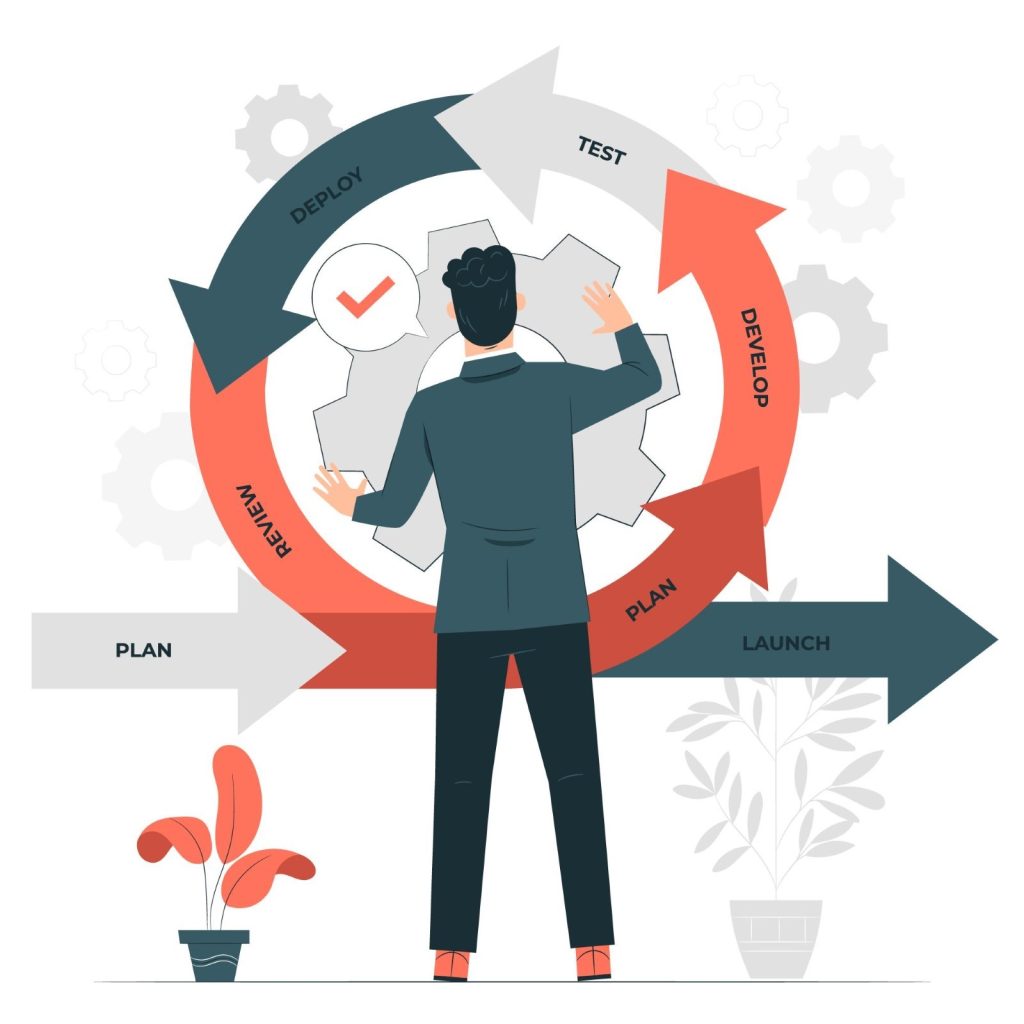
We understand that simply saying agile is better than waterfall might not sit well with everyone. This is even though it’s a fact in most cases. The only time when waterfall has an upper hand on agile is when the team has all the project requirements before the project starts. This is not possible for every project since most of them are susceptible to changes mid-development.
Similarly, many constraints in the waterfall model prevent it from being the ideal SDLC. All those constraints and disadvantages have been mentioned above. Due to such reasons, when companies switch to agile development methodology, you should too.
The good news is that you don’t have to look anywhere else because Veltris offers you agile development services. This, along with many other businesses and IT solutions by industry experts.
Conclusion
All the above information, including the agile vs waterfall pros and cons, is to say that agile trumps the waterfall model in many cases. Don’t get us wrong, the waterfall does work for the previously mentioned reasons. Still, in this age when businesses expect you to bring results before their competitors, choosing agile is the best option. So go on, book a consultation call and employ our services.
Build the right product through Agile Development
Agile product development has gained tremendous popularity over the past few years. Its demand has increased due to its vast range of benefits in the current world of software. The reason isn’t surprising at all. It makes your work easier and at the same time, it skyrockets the quality and efficiency. This, in turn, reduces the time consumed and accelerates the delivery of the product.
Who wouldn’t wanna have all these benefits for their organization? Many companies have now started using agile methodology in their product development. While some organizations still prefer the waterfall method, it is strictly based on the kind of product you want to develop. In case you want to learn the difference between waterfall and agile, check out this article: Agile vs Waterfall Methodology.
In case any of their employees aren’t very familiar with the agile methodology, many companies even train them.
Agile Product Development
Veltris, being one of the fastest-growing software development firms in the IT sector, also uses an agile product development methodology. Agile product development defines the creation of products with agile processes and techniques. The whole development process is divided into multiple phases, which makes it easier for product development.
Each phase is for a week or 2, and sometimes more. These development time periods are called sprints. During a sprint, the scrum team decides on a few things that they want to complete, and then they finish them during the assigned time. Here, we are first going to talk about agile product development, which includes both hardware and software products.
These can both be interrelated, as hardware contains software and software is embedded in the hardware. Previously, agile was considered useful only for software, but this has changed now, and we see how agile technology has its uses in hardware development too.
The Main Focus of Agile Product Management
- Hardware product: Deliverables oriented towards developing specifications for a product that needs to be manufactured.
- Software product: Deliverables oriented towards building the real product. Example: an online store.
- Hardware embedded with software: Embedded software can evolve within the bounds of a static hardware environment. Example: Cell phone, network equipment, and also analytical equipment for chemistry and biotech.
- Hardware with associated software: Associated software can evolve over multiple devices. Example: laboratory equipment added to locally hosted or web-based software controls multiple devices.
This isn’t to say that agile is only used for these cases and in software development only. Many industries and companies have started to integrate agile methodologies into various processes. It’s not just the IT sector now, but you will find it in the automotive industry, marketing campaigns, universities, and a few other sectors.
The reason for agile integration in other sectors is pretty simple. It makes every process easier and less time-consuming, without compromising on the end product. Sometimes, even improving the end result.
Product Management

Product management is said to be an organizational function that tends to guide every step of a product’s life cycle, starting from development to positioning and pricing. The focus is on the product and its customers first. To build the best possible product, product managers need to advocate for customers within the organization and make sure that the voice of the client is heard and heeded.
Product management can be described as the intersection of business, user experience, and technology.
Business
It helps teams to achieve business objectives by bridging the communication gap between designers, customers, and the business.
UX
Product management in UX has its focuses on user experience and represents the customer inside the organization.
Technology
This happens regularly in the engineering department. A thorough understanding of computers is necessary.
If you want to learn about various phases in agile methodology, then check this workfront or MarsDD article.
Why Agile Product Development is Needed?

We have seen that agile development allows for the prevention of time wastage and useless designs. The iterative nature of the philosophy creates an environment of constant progress and innovation. With that said, there are a vast number of benefits that are required in today’s world
- It tends to force engineering teams through the DMU cycle at a faster pace for smaller sections of the design.
- Along with the establishment of cross-functional teams, workloads can be managed entirely autonomously within each of the smaller tasks.
- Work can constantly be accomplished without a bigger meeting that would involve the whole engineering team.
- It induces active thinking and preventative action.
- In a typical design process, we create a blueprint of tasks that need to be accomplished and followed as much as possible. This “instruction-based” workflow might work well, but it encourages engineering technologies to work better.
- By utilizing iterative agile techniques, we can be deeply involved with the problem-solving structure throughout the creation process, perhaps even foreseeing possible issues.
- It creates an environment for innovative ideas.
- The goal of every engineer or engineering team is to progress a project through constant innovation, finally reaching the best possible deliverable product for the client that would help them work according to their requirements.
- Static waterfall processes can be said to be the best possible solution imaginable when the initial specifications and the workflow blueprint are imagined. Agile allows for constant change throughout the entire workflow of the creation of designs and creates a setting that would be effective for innovative growth.
Why Should You Avail Our Services?
Veltris gives you detailed knowledge regarding agile methodology before we start working on a project with you. Our agile product management team provides a clear view regarding the launch of the product and its management aspects. We let our clients decide on the deliverable and the features while we work on the time and keep the shareholders updated. This is done in many sprints.
In case any feature or changes are missed in one sprint, we finish them in the next one. All this without compromising on the release date or quality of the final product. Veltris gives a platform to further explore agile skills and technology. Hence, for any further details, feel free to contact us and register.